Lee Cronin's The Mummy: The Entity Takes Over A Person's Body And Brings It Back To Life In A Form Of Reanimation
Lee Cronin's The Mummy Synopsis:
A journalist named Charlie (Jack Reynor) and his family are devastated when their young daughter, Katie, vanishes into the desert without a trace. The family’s world is upended eight years later when Katie mysteriously reappears, seemingly unharmed. While the family hopes for a miraculous reunion, they quickly discover what has returned isn't their child but a malevolent ancient force that has "reanimated" her body.
Genre: Horror
Release Date: In theaters April 17th, 2026
Lee Cronin's The Mummy Fun Facts: The Entity Takes Over A Person's Body And Brings It Back To Life In A Form Of Reanimation
"Poltergeist" meets "Seven":
Director Lee Cronin described the movie as the blend of the supernatural vibes from Poltergeist and the dark, gritty mystery of Se7en. Instead of just trying to scare you with sharp noises, the film focuses on psychological thrills that use disturbing images of the human body to creep you out. The film also relies heavily on a constant feeling of dread and unsettling visuals to enhance the domestic horror experience.
Authentic Egyptian Cast:
Cronin wanted the film to feel authentic instead of the "Hollywood" version of Egypt seen in previous movies. He made sure the film stayed true to the culture by featuring an Egyptian cast like May Calamawy from Marvel Studios (Moon Knight). Much of the movie is in Arabic, and by using authentic language and cast, the supernatural elements feel more real and believable.
A "First" for the Franchise:
Even though the previous films "The Mummy" were made by Universal Pictures, this new version is made by New Line Cinema (through Warner Bros. Pictures). While the Universal versions focus mainly on adventures, monsters, and ancient mythology, Lee Cronin's version focuses on the supernatural element, reanimation, mystery, claustrophobia, and the psychological type of domestic horror. This movie is a standalone story that has no connection to the older movies.
The Horror Powerhouse Team:
The movie is produced by the horror powerhouse team of Jason Blum (Blumhouse) and James Wan (Atomic Monster), two of the biggest production companies in the horror genre that brought to you The Conjuring franchise, the Insidious franchise, the Black Phone franchise, and the M3GAN franchise, to name a few.
Practical Effects:
If you’ve seen Evil Dead Rise, Cronin is known to love having "real-life" practical effects over CGI in his movie. The early teaser features a dried-up mummy coming back to life and a scene involving a scorpion and spider crawling out of a corpse's mouth.
The "Deadites" Connection:
Cronin explained that the "Mummy’s Curse" in this movie works a lot like the demonic entities known as Deadites from Evil Dead Rise. The entity takes over a person's body and brings it back to life in a form of reanimation. The movie focuses on a home setting, making the horror feel more personal and claustrophobic.
Filming Locations:
Even though the setting takes place in the desert and the story is about "The Mummy," which is authentic to the Egyptian culture, most of the filming actually took place in Ireland and Spain. The entire shoot took about three months to complete.
Lee Cronin's The Mummy Review: By Moving In Ways That Feel Almost Human But Not Quite, She Triggers A Natural Sense Of Dread On The Big Screen
Lee Cronin, the creative force who gave us the intense and bloody Evil Dead Rise (2023), has taken The Mummy franchise for a complete overhaul. While the title Lee Cronin's The Mummy suggests a grand adventure through Egyptian tombs, the final product feels like something else entirely. The previous Mummy's film focused on wide-open landscapes and "tomb raiding" excitement; Cronin's version of The Mummy focused on the suffocating atmosphere of a supernatural possession. Instead of the monster-on-the-loose flick, the story focuses heavily on the grueling, spiritual battle to remove a curse, making it feel more like The Conjuring than Indiana Jones. The film replaces the fast-paced thrills of an action movie with a slow-paced, horror experience that prioritizes dread over fun and exciting adventure. Cronin has completely transformed The Mummy franchise from the action-adventure genre into the extreme horror genre.
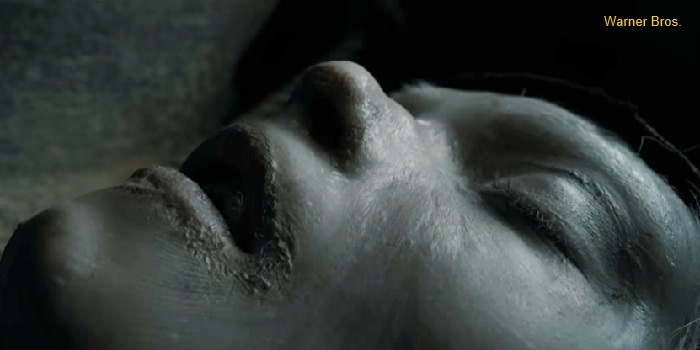
Lee Cronin's The Mummy film focuses on the Cannon family, Charlie (Jack Reynor) and Larissa (Laia Costa), whose lives are shattered when their young daughter, Katie, vanishes without a trace in the middle of the Egyptian desert. In a twist that seems like a miracle, Katie is finally found eight years later. She is discovered inside a heavy basalt coffin, a sarcophagus, that was being transported on a plane that crashed in the desert. The girl they recover is now a teenager, Katie (Natalie Grace); miraculously, she is alive, but she has been transformed. Most disturbingly, her skin has taken on a thin, paper-like texture and is covered in ancient, demonic script that suggests she was part of a dark ritual. As Charlie and Larissa bring her to their secluded home to nurse her back to health, the atmosphere turns from medical concern to pure horror. Charlie and Larissa begin to realize that the girl they brought home is no longer just their daughter. Instead, her body has become a living vessel for a powerful, ancient demon named Nasmaranian, leading the family on a slow, terrifying descent into madness.
Lee Cronin's The Mummy film sets aside CGI in favor of stomach-churning realism, using "practical effects" (real-world props, makeup, and prosthetics) that are absolutely world-class. The horror is physical and uncomfortably close: you’ll see teeth being violently ripped out and layers of skin that peel away as easily as damp, old wallpaper. You can almost feel the brittleness of the thin layer of skin as it comes off and the dampness of the decay underneath. The actress playing Katie delivers a performance that is both haunting and physically impressive. Her limbs appear rubbery and contorted into impossible, bone-snapping angles that defy nature. This isn't just a bit of makeup; it is a total "full-body makeover" that transforms a teenage girl into a crumbling, ancient artifact that is still somehow breathing. Seeing a young girl's limbs twist and bend in ways the human frame shouldn't allow creates a sense of deep physical unease.
In Lee Cronin's The Mummy, Natalie Grace delivers a terrifying performance that is as much about her physical movements as it is about her acting. She pulls off a difficult balancing act: on one hand, you feel a deep sense of pity for her as a victim; on the other, she projects the chilling aura of a monster waiting to strike. Her ability to switch between these two states is what makes the film so unsettling. One moment she looks like a fragile, broken child, and the next, her body language shifts into something sharp, calculated, and dangerous.
Grace uses her eyes brilliantly to convey a sense of being trapped inside her own body. You feel the weight of the eight years she lost and the toll it has taken on her body from the dark rituals she was subjected to. She appears to be very still and fragile after everything she has been through. She cleverly adopts "animalistic" traits, sudden twitches, a predatory stare, and a way of lurking in the shadows that suggests she is hunting, not just hiding. By moving in ways that feel almost human but not quite, she triggers a natural sense of dread on the big screen. Some of the frightening moments are the subtle things that she does. Tiny, sinister smiles or cold glares that vanish quickly, remaining perfectly still for long periods, which builds immense tension before a burst of violence.
In Lee Cronin's The Mummy, while the Cannon family is trapped in their personal nightmare, May Calamawy delivers a standout performance as Detective Dalia Zaki. Her character serves a crucial role in the movie: she is the engine that drives the plot forward, providing the investigative momentum that keeps the story from feeling stuck in one place. As the couple struggles with the supernatural return of their daughter, Detective Zaki is the one out in the field, piecing together the dark history of "The Magician" and the true nature of the plane crash. She connects the dots between the disappearance in Egypt and the bizarre discovery in New Mexico. Calamawy’s scenes inject a sense of urgency, giving the audience a break from the slow pacing at the house. Calamawy’s character is the essential counter-balance to the chaos unfolding in the Cannon household. Her performance ensures that even as the movie descends into madness, there is always a thread of logic for the audience to follow.
Lee Cronin's The Mummy film is not a lighthearted adventure through ancient pyramids; this movie is for fans of the brutal, relentless, and blood-soaked intensity found in films like Evil Dead Rise (2023). Director Lee Cronin has taken an old legend, a story many of us have seen told a dozen times, and transformed it into a modern-day nightmare that feels fresh and genuinely terrifying. The past version was about adventure, discovery, romance, and heroic battles. Cronin's version is pure survival horror; it strips away the charm and replaces it with dread. The goal isn't to find treasure; the goal is to survive a spiritual and physical assault. Cronin uses violence with a purpose; the violence isn't just there for shock value, it’s used to show how an ancient evil is literally tearing apart a modern family’s life and home.
You Might Also Like...
Keeper Trailer, Fun Facts & Review
Keeper Synopsis: A couple, Liz and Malcolm, head to a secluded cabin for a romantic anniversary retreat. Their peaceful escape takes a dark turn when Malcolm
Ice Cream Man: Be Ready, Every Drop Of Blood Will Look Terrifyingly Re
Ice Cream Man Synopsis: The idyllic suburban town of Bayleen Bay is thrown into absolute chaos when a mysterious new ice cream truck rolls into the neighborhood
Weapons Trailer, Fun Facts & Review
Weapons Synopsis: One night, exactly at 2:17 AM, all the kids in Mrs. Gandy's class, except for one, suddenly wake up, leave their houses, and disappear into