Heart of the Beast: Movie Magic Is At Work In The Natural Elements In The Heart Of The Film
Heart of the Beast Synopsis:
James Belmont (Brad Pitt), an ex-Special Forces officer struggling with PTSD, finds himself stranded deep in the unforgiving Alaskan wilderness alongside his retired combat German Shepherd, Odin, after a catastrophic plane crash. Isolated from civilization and facing brutal elements, starvation, and savage apex predators, Belmont and Odin must rely on their military instincts and an unshakeable bond forged in battle to endure an extreme fight for survival.
Genre: Adventure, Thriller
Release Date: In theaters September 25th, 2026
Heart of the Beast Fun Facts: Movie Magic Is At Work In The Natural Elements In The Heart Of The Film
Reuniting After Fury:
Brad Pitt and director David Ayer are teaming up again for the survival thriller Heart of the Beast. It's their second project together, following their successful 2014 World War II tank movie, Fury.
A Long-Awaited Script:
Written by Cameron Alexander, the script for Heart of the Beast was originally featured on Hollywood’s prestigious 2017 Black List, an annual industry vote highlighting the best unproduced screenplays in town. After spending years floating around various studios during development, the project finally found its permanent home at Paramount Pictures.
Surprise Oscar-Winning Producer:
The film is backed by a major Hollywood power couple: La La Land’s Oscar-winning director Damien Chazelle and producer Olivia Hamilton. The husband-and-wife duo produced the movie under their production banner, Wild Chickens Productions.
New Zealand Stands In for Alaska:
Movie magic is at work in the natural elements in Heart of the Beast. While the movie is set in the unforgiving Alaskan wild, filming actually took place thousands of miles away near Queenstown, New Zealand, in early 2025. Producers chose the area's dramatic alpine peaks and icy valleys as the perfect stand-in for the frozen landscape.
Reuniting Pitt and J.K. Simmons:
Adding even more star power to the cast, Academy Award winner J.K. Simmons joins the film. His role sets up an exciting on-screen reunion with Brad Pitt, bringing the two Hollywood veterans back together for the first time since their memorable team-up in 2008's Burn After Reading.
A Real-Life Rescue Dog:
The heart of the Beast focuses on James Belmont (Brad Pitt), a retired Special Forces officer battling PTSD who gets trapped in extreme Alaskan terrain following a harrowing plane crash. He survives alongside his loyal German Shepherd, Odin, a role portrayed on screen by Uber, a real-life New Zealand rescue dog backed by a team of trained canine stunt dogs.
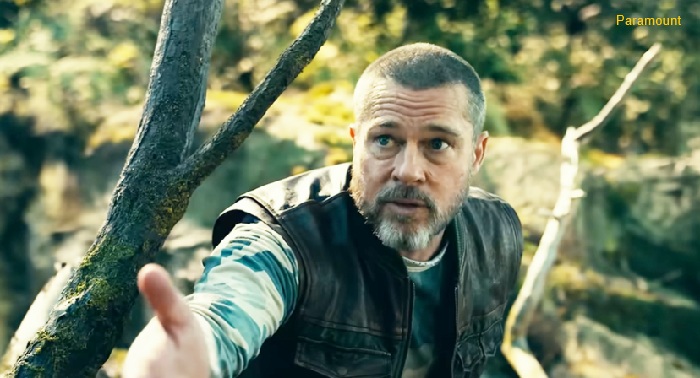
Heart of the Beast Review: It Makes Every Injury, Every Decision, And Every Freezing Breath Feel Painfully Real
David Ayer’s film Heart of the Beast is an unexpectedly gentle and tightly focused drama about survival in the wilderness. Instead of relying on his usual explosive action and chaos, the director takes on a much quieter and deeply emotional approach.
The movie reunites Ayer with Brad Pitt; they previously worked together in Fury. Pitt plays James Belmont, a retired U.S. Special Forces who is worn down by war and living with severe PTSD. Seeking peace and isolation, Belmont lives completely off the grid in the remote, punishing wilderness of Alaska. He isn't entirely alone; his sole companion is Odin, a retired military scout dog who shares the exact same painful emotional trauma from their past service.
As the story unfolds in Heart of the Beast, their quiet life in the frozen wilderness is put to the test. When an unexpected disaster leaves the pair stranded deep in the icy, isolated wilderness 56 miles away from the closest outpost, their peaceful getaway suddenly transforms into a brutal, exhausting battle to stay alive against the harsh elements of nature. Forced to rely entirely on each other to survive both the harsh natural elements and the terrifying weight of their shared trauma, the bond between the former soldier and his canine partner becomes the emotional heart of the entire film.
Without a quick way to call for help or an easy route back to safety, they are forced to brave freezing temperatures, dangerous terrain, and unpredictable natural hazards. Every mile they travel through the punishing winter landscape demands immense physical strength and relentless focus. As their supplies run thin and the environment grows increasingly hostile, their journey becomes far more than just a walk through the cold; it becomes an intense test of endurance where a single mistake could mean the difference between life and death.
Heart of the Beast shines brightest in its quietest moments, letting actions speak louder than words. Director David Ayer is best known for his raw, realistic, and step-by-step approach to filmmaking, and here he uses that exact style to show what it truly takes to survive in the wild. Instead of filling the silence with dramatic speeches, the film focuses on the real, everyday tasks of staying alive.
Viewers get an up-close look at the practical reality of wilderness survival: carefully measuring out dwindling food supplies to stretch every meal, building emergency shelters to block out freezing winds, and plotting courses across treacherous, uncharted terrain. The movie slows down to show these methodical details, building tense, realistic suspense out of basic human necessity, making every small success or mistake feel monumentally high-stakes.
Heart of the Beast treats the harsh realities of staying alive with a grounded, highly realistic approach. Every survival challenge is shown in clear, practical detail rather than styled up for dramatic glamour. Viewers watch as the characters carefully piece together makeshift splints out of branches and scrap materials to support injured limbs and analyze the dangerous currents of freezing, churning river before daring to cross.
On top of these physical hurdles, they face the constant, deadly threat of extreme cold, showing the agonizing, real-world symptoms of hypothermia as it slowly saps their strength and mental clarity. When the film refuses to gloss over these uncomfortable details, it makes every injury, every decision, and every freezing breath feel painfully real, giving audiences a genuine appreciation for how agonizingly tough wilderness survival truly is.
Brad Pitt delivers one of the quietest and most restrained performances of his entire career in Heart of the Beast. Rather than relying on long speeches or dramatic dialogues to explain his character's feelings, he lets his face, body language, and subtle expressions tell the whole story.
You can see the heavy weight of his past trauma in the deep lines on his face and the quiet exhaustion in his eyes. Yet, even through that pain, he manages to project a powerful sense of warmth and affection toward his dog and an unrelenting, quiet determination to keep moving forward. It is a masterclass in silent acting: he communicates deep grief, fierce loyalty, and the determined willpower to survive without ever needing to spell it out for the audience.
Odin, the loyal dog at the center of the story in Heart of the Beast, completely steals the show. Played mainly by a German Shepherd named Uber along with a skilled team of trained German Shepherds. Odin is far more than just a companion to move the plot forward; he is the true emotional heart of the whole movie. The bond between Belmont and Odin feels completely real, as if the two have depended on each other for years.
Neither character relies on words to communicate; their relationship is built entirely on subtle body language, silent eye contact, and shared glances of quiet understanding. You can instantly feel the deep history and intense, unbreakable trust between them. Every gesture conveys an unspoken promise to protect one another, making every close call and life-threatening danger in the film feel remarkably personal and deeply emotional for the audience.
While the first hour of the film excels as a quiet, slow-paced survival story, Heart of the Beast takes a noticeably different tone as it approaches the end. The script drops its quiet, subtle approach and relies heavily on obvious speeches and dramatic sentimentality. Instead of continuing to let the actions and silent moments speak for themselves, the film suddenly pauses to spell out its patriotic and pro-military messages directly to the audience.
This unexpected shift can feel a bit heavy-handed; after spending so much time immersed in a realistic, grounded struggle for survival, viewers may find this sudden turn toward Hollywood-style emotional speeches to be jarring, slightly undercutting the raw, authentic grit that made the rest of the story so powerful.
You Might Also Like...
How to Make a Killing: Each Character Is So Uniquely Dislikable And
How to Make a Killing Synopsis: Becket Redfellow (Glen Powell), a blue-collar outcast disowned by his aristocratic family at birth. Determined to reclaim his
After The Hunt Trailer, Fun Facts & Review
After The Hunt Synopsis: Alma (Julia Roberts), a philosophy professor at Yale, finds her comfortable life turned upside down when her top student
The Devil Wears Prada 2: Now, Miranda Has To Play Nice With Emily To
The Devil Wears Prada 2 Synopsis: Two decades after making her mark, fashion mogul Miranda Priestly (Meryl Streep) faces the ultimate career crisis: the decline